Fast Flood Dry-Out Work That Gets Repairs Moving
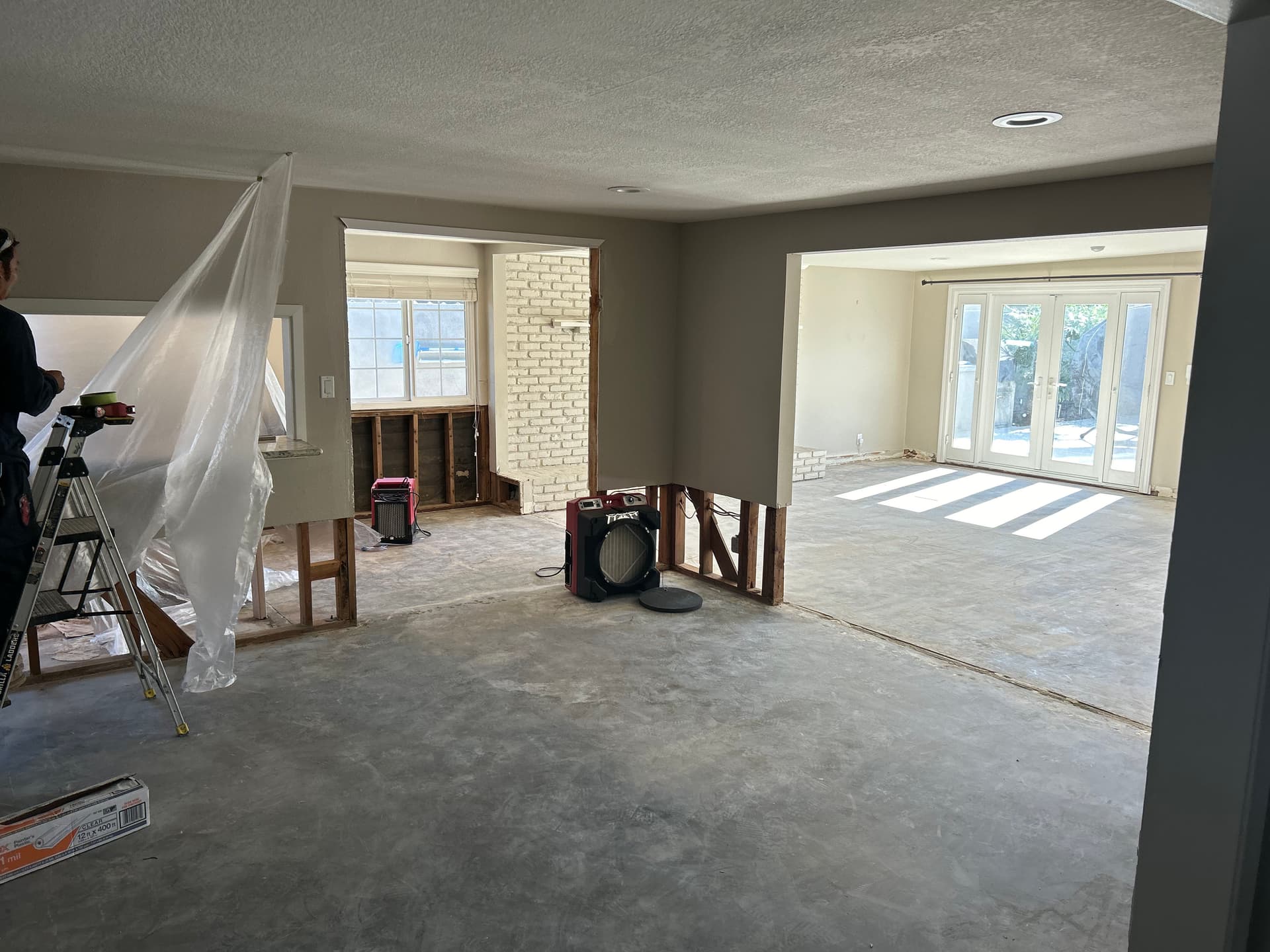
When water gets into a home, the clock starts ticking immediately. Every hour that passes gives moisture more time to work into subfloor, framing, and drywall - and that's when a manageable situation turns into a much bigger one. Getting the dry-out started fast is the single most important thing you can do.
Here's what that process actually looks like. Flooring comes up, lower sections of drywall get removed where needed, and industrial drying equipment goes in to start pulling moisture out of the structure. It's not glamorous work, but it's the right work. Skipping steps or cutting corners at this stage almost always creates problems down the road - think mold, soft subfloor, or structural issues that could have been avoided.
We use commercial-grade air movers and dehumidifiers to drive the drying process. These aren't the box fans from the hardware store. The equipment we run is built specifically for this kind of job, and it makes a real difference in how quickly a space reaches safe moisture levels. Getting that structure fully dried out is what allows repairs to actually begin - you can't close up walls over wet framing.
Plastic containment goes up to protect the rest of the space while work is happening. The goal is always to limit the affected area and keep the rest of the home or business as livable as possible during the process. If you've got water where it shouldn't be, the worst move is waiting to see if it dries on its own.